Showing posts with label Is This Jazz?. Show all posts
Tom Waits' Rain Dogs is an extension of Swordfishtrombones, and certainly an experiment into yet another backwater, scurvy-ed and dilapidated album. For me, the real hit on it is Marc Ribot, who helps drive the jostled 'Singapore', but anchors down 'Jockey Full of Burbon'. This, of course, is not meant to overlook appearances from Bobby Previte on auxiliaries here and there, Greg Cohen on upright, or John Laurie's background vocalish-sax on 'Walking Spanish'. The more solemn Diane, by veterans Chet Baker and Paul Bley, is heroin remnants dripping off into standards. By '85 Baker was utterly destroyed by heroin, drugs or drug deals, by this time and admist label and mood jumping, he would fall out of a window to his death three years later. But here is one of Baker's last statements: trumpet accompanied by chiming piano trade off on a textbook rendition of 'How Deep is the Ocean'. Its dreary, hazy, and relaxing.


John Carter's Castles of Ghana features free-jazz compositions on the clarinet as well as Bobby Bradford on cornet. It's left-field avant howls create an atmosphere of remorse and reflection on the African Slave Trade. Lester Bowie is similar on I Only Have Eyes For You, an album not unlike Coltrane's My Favorite Things. State of the Tenor is a live double-disc from Joe Henderson and is a history lesson, with selections from all walks of jazz, as well as a beautifully recorded show from the Village Vanguard. The Big Gundown, Zorn's reworking/tribute to Ennio Morricone, was at one point titled Once Upon a Time in the Lower East Side and is his first in a set of interpretations he would do. After reinventing quartet interactions on his early works, Gundown is the ushering in of a phase which would move on to put Ornette Coleman, hard bop,and Mickey Spillane through his own filter. Finally, Ran Blake's third-stream, film nior compositions are collected on Painted Rhythms and then he would go on to do many more things, mostly in the footsteps of Horace Silver.
  1. Chet Baker and Paul Bley - Diane
  2. John Carter - Castles of Ghana
  3. Tom Waits - Rain Dogs
  4. Lester Bowie - I Only Have Eyes For You
  5. Joe Henderson - State of the Tenor
  6. John Zorn - The Big Gundown
  7. Ran Blake - Painted Rhythms, 1
In light of the third annual Lowell Film Festival, which brought many people out to relevant Depression-era movies a couple weeks back... I got an idea for writing about music in movies while watching the excellent Capra film It Happened One Night.

Howard Jackson's score was uncredited...but it presents an interesting look at film soundtracks: it is an elitist genre. Obviously a film with a good soundtrack is greatly enhanced. But what about a soundtrack alone? Does Carl Stalling's cartoon music stand alone because we've been watching cartoons for years or is it because its some of the most technical, fast orchestral music we've heard? I think they can stand alone, and here are some that do. I watch a lot of movies, so maybe I am biased by the images on-screen, but nonetheless, they certainly can translate.


  • Naked Lunch, Ornette Coleman & Howard Shore - (1990, dir. David Cronenberg) - This meeting of the minds, in my opinion, is unparalleled. Coleman's previous orchestra work on Skies of America had the orchestra molded with him, playing sporadic, free compositions. Naked Lunch bends Ornette around the mood setting orchestra of Howard Shore.
  • Brazil, Michael Kamen - (1985, dir. Terry Gilliam) - Just like Terry Gilliam in his film, Kamen's music puts a technocratic spin on sambas, film nior, dramatic fantasy, and everything in between,. To be amazed: add the track "Waiting for Daddy" with Johnathan Pryce, soggy toast, and ducts.
  • Vergogna Schifosi, Ennio Morricone - (1969, dir. Mauro Severino) - This is a great example, because I have not seen the film and thus have no images to connect to. Dirty Angels may be one of the lesser known of Morricone's but it is the most in touch with the popular music sound he injects into all of his works. The center piece of the whole album is a 1-2and bassline which lies beneath haunting vocal lines, summery guitar solos, and piercing organ attacks. It's best track is the spiraled rising of all parts on Una Spiaggia a Messogiorno.
  • The Conversation, David Shire (197 dir. Francis Ford Copolla) - 70s funk-nior from movies like Three Days of the Condor and the Taking of Pelham 1-2-3 seemingly responds to Blaxploitation be saying 'we can be hip too!' In FFC's The Conversation, not only was the film made between Godfather parts I and II, but the main character, portrayed by Gene Hackman, plays saxophone, and the ending this movie has one of the greatest endings.
  • The Shining, various - (1980, dir. Stanley Kubrick) - Not to many arguments here, but this soundtrack includes a lot of source music and pop tunes which blend together very well. The Gleneagles band's old time, big band recordings are very washed out and sound eerie, plus Henry Hall's vocals are regal, yet sadistic in context. Electro-charged Wendy Carlos makes a breathtaking acoustic-electro appearance having worked with Kubrick 8 years before on A Clockwork Orange. However, the true terror, infused with mystery behind the film, comes from Krzysztof Pendereck (pictured above). This Polish compose's incredibly dark, unexpected contributions are marked with unexpected blasts of auxilary percussion, far-off, daunting brasswork, and truely scary sounds: open-ended terror of not knowing.
  • Blue Velvet, various - (1989, dir. David Lynch) - Picking out one of these with Angelo Badalamenti wasn't easy to do, so I just went with my favorite movie. He also scores the City of Lost Children, Holy Smoke, Wicker Man, and everything else Lynch has done. Aside from working with Lynch, he has collaborated with Shirley Bassey, and that just kicks ass. Atmospheric, ethereal, dreamy, terrifying. Also, this soundtrack has the best old school rock and roll from Bill Doggett, Roy Orbison, and others to complement Angelo's eerie sound and Lynch's surreal images.
  • Aguirre, the Wrath of God, Popol Vuh - (1972, dir Werner Herzog) - Before Grizzly Man and the Fall of the Berlin Wall, Krautrock was spilling out everywhere. Apart from being an airy, highly experimental band, this film soundtrack is frequently cited as one of their best works.
Honorable Mentions:
  • Punch Drunk Love, Jon Brion
  • Alien, Jerry Goldsmith
  • Amarcord, Nino Rota
  • Ascenseur Pour L'Echafaud, Miles Davis
So why not do last year? It was pretty interesting overall with labels like Tzadik (#2/#9) and ECM (#8) ushering in classicism and a jazz-plus of sorts. European artists like Stefano Bellani were now veterans of the not-so-fine line between jazz and classical. Hard bop has returned as a mainstay since it's burrowing underground during the mid-70s and has now been refined over and over again after reemerging during the late '90s. Two Cities, Sensible Shoes, and Varmint all are excellent examples of this.

Full Blast is one of Peter Brotzmann's many side prjoects. Allen Tousaint's Bright Mississippi is a great homage to the state itself and guys like Django, Duke, Monk and others. Rune Grammofon's Fire! album was great, topping out even international label mates Supersilent, but the real prize goes to Bobby Bradford. Midnight Pacific Airwaves is simply incredible, and features cross-career tracks from Bradford, half recorded in 1977 and the rest in this decade.


  1. Bobby Bradford Extet - Midnight Pacific Airwaves
  2. Led Bib - Sensible Shoes
  3. Aram Shelton's Fast Citizens - Two Cities
  4. Borah Bergman Trio - Luminescence
  5. Old Dog - By Any Other Name
  6. Jason Adasiewicz' Rolldown - Varmint
  7. Full Blast - Black Hole
  8. Stefano Bellani - Stone in the Water
  9. Allen Toussaint - Bright Mississippi
  10. Fire! - You Liked Me Five Minutes Ago


BYARD LANCASTER - HORNS (1-6)
J. R. MITCHELL - PERCUSSION (1-6)
CALVIN HILL - BASS (1, 5-6)
PAUL MORRISON - ELECTRIC BASS (1)
LESTER LUMLEY - PERCUSSION (5-6)
SID SIMMONS - PIANO (2-4)
JEROME HUNTER - BASS (2-4)

The 1972 release of Byard Lancaster's Live at Macalester College on Dogtown Records (owned by Lancaster himself) was the building of a bridge. On one side, a spiritual, robust free jazz spawned from the likes of Ornette and Coltrane and on the other, the startlingly new idea of jazz-funk. The jazz-funk era was slowly being heralded, Joe McPhee's Nation Time would came in 1971, Davis' On the Corner the following year, and Hancock's Head Hunters one more. But it was Byard's blending of these two styles which he was exploring on the 1966 debut, It's Not Up to Us and can be heard on Macalester.

Lancaster is a Philadelphian multi-instrumentalist who attended Berklee and feels both comfortable on the reeds or brass. He is also comfortable fronting a funky beat laden with toms or congas, or a seemingly relentless free-jazz assault, provided here by drummer JR Mitchell. Opener 1234 provides these aspects, with Lancaster beginning on sax, and then putting it down at the 13 minute mark, and inducting a sprawling, but similar trumpet line. It was recorded in Boston in 1970, and features, in an uncannily fitting way, both an upright bassist (Calvin Hill) and an electric bassist (Paul Morrison).

The official 1971 concert begins with Last Summer, a marked change of pace from 1234, inviting flute and pianist Sid Simmons to trade off in a erie ballad which is accented by a bowed bass background, provided here by Jerome Hunter. War World is a more familiar Lancaster tune, featuring Mitchell's drum floes, which roll about in as he changes from tom, to rim shot, to sharp, full ride attacks. For a minute and a half, he inducts Lancaster, who comes barreling in on alto and blazes along with Mitchell. The bass is invited for the conclusion, and the piano non existent. On the final official concert track, titled Live at Macalester, Lancaster, Simmons, and Hunter all attack the head, and settle into a hard bop straight-shooter. The Lancaster solo is truly explored here, 4:30 into the tune somber Far-Eastern Scales can be heard, and the track takes off from 52nd Street and lands on a rainy, oriental mountainside. Mitchell is also noticeably more roped in, keeping his punchy rim shots to a minimum. This track is very cinematic and third-stream in quality, provided mostly Lancaster utilizing the energy of his sax versus the melancholia of flute and Hunter provide barge-like bass sounds where needed.

Lancaster recorded the last two tracks on the album in 2008. They feature Calvin Hill on bass and Lancaster on a horn arsenal. Both tracks' other players are unknown. World in Me is a daunting wall of free-sound. Trumpets, piano, saxophones, electric guitar, and flutes are ground up and take turns emulating screaming people. Again, they are patchworks of several different styles, with Lancaster heralding his percussive forces to tour styles of soul, funk, free, and oriental musics.

This reissue provides a cross-section of Byard Lancaster's criminally unknown, but diverse career.
As the 80s gave way to the 90s radio-friendly, and retro-swing began to dominate, and would do so for years. Canonization of jazz classics were also coming into style, The Ultimate Collection, Complete ____ Sessions, Very Best of ____, and other ways of doing were suddenly over shadowing what was happening...they still are. (see Charts on 50th Anniversary of Kind of Blue, CMJ.) Apart from the likes of David Sanborn, the Rippingtons, and Big Bad Voodoo Daddy, a few still managed to push onward into the decade. Experimental big band, though not invented in the 80s, makes this list. Ornette Coleman accompanies Howard Shore, NRG Ensemble blasts out in Chicago, and David Moss' Theoria was a 5 part ECM album bordering on neo-classical. Steve Lacy holds down the soprano sax on We See. Edging it out is Englishman John Surman, hot off the presses with Adventure Playground - results of sessions with Gary Peacock and Paul Bley.


  1. John Surman - Adventure Playground
  2. Steve Lacy - We See: Thelonious Monk Songbook
  3. Ornette Coleman and Howard Shore - Naked Lunch Soundtrack
  4. Anthony Braxton - Victoriaville '92
  5. NRG Ensemble - The Finnish/Swiss Tour
  6. Thomas Chapin Trio - Insomnia
  7. Edward Vessala - Invisible Storm
  8. David Moss - Theoria
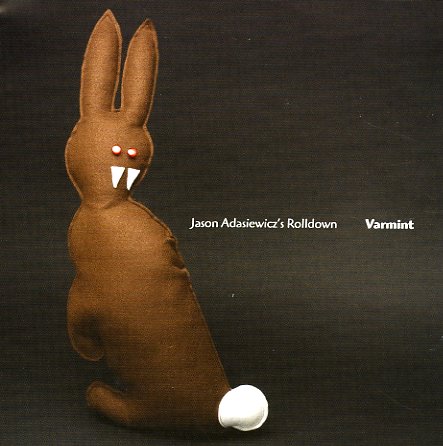
Jason Adasiewicz's Varmint, is his second album with Rolldown, a Chicago-based jazz sextet including Josh Berman. Apart from Berman's Old Idea, Adasiewicz also performed on Rob Mazurek's no-wave, post-jazz record Sound Is, Chris Connelly's industrial nightmare Forgiveness and Exile (with a slew of the Jade Tree roster inducing the brothers Kinsella and the brothers Vida), and he helps round out the Exploding Star Orchestra on both their albums. Clearly [a-DAH-shev-ITZ] is as much a musical auteur as an adaptive vibraphonist.


Varmint, however, isn't post-rock or maniacal, mechanical obelisk, but rather straight jazz. The album's timeless quality hearkens back to the likes of Rudy van Gelder and fits in as a hard bop masterpiece, with tunes of unwavering swing pressed with, at times, rhythm less drums and unexpected changes. Perhaps fittingly it is anchored by an Andrew Hill tune which ends the album. "The Groits" is off his 1964 album Andrew!!! and Adasiewicz pays more homage to the entire Hill sound, rather than making it his own. The bouncing vibes-piano part is replaced by Adasiewicz going it alone, allowing saxophonist Aram Shelton to take to the solo as Hill would've done on piano, marked by alternating short fast attacks and slow bop-drop interludes. The album's title track enters as a disarray of up-down jabs, provided by the rhythm section in drummer Frank Rosaly and bassist Jason Roebke. As the horns solo above, they withdraw to regimented straight swing and then back into quick, samba double time shots, all the while their front man providing a glaze of freewheeling vibe work.

Each track will surely flag down a famous player from your memory, it's almost impossible to listen to Varmint and not draw connections. For blues, try the inching, methodical "Dagger." "Hide" makes sharp turns from jangling to hard bop. There's no escaping the vastness of the album, Adasiewicz's love for music shines throughout.

1957 saw the rise of Sonny Rollins and Thelonious Monk, a startling new sax player who was finally on his own and a budding genius, respectively. Saxophone Colossus came out of Rollins' quartet work, but it was his trio work which was most interesting- which would come on Way Out West the March before Colossus. Cecil Taylor, who would soon become one of the best improvisers on the keys, plays Newport. Yusef Lateef began to make his mark as a spiritualist version of Dexter Gordon. Also notable was Mal Waldron's work with both Jackie Maclean and John Coltrane, who: kicked his heroin habit, devoted himself to the almighty, and met up with Johnny Griffin on the streets of Hackensack, NJ in April while he was on his way to record A Blowin' Session. Griffin's album was perhaps the most star-studded hard-bop session of all time, each player going onto achieve greatness in their own regard. The tenor trio of Coltrane, Griffin, and Hank Mobley was supported by trumpeter Lee Morgan, pianist Wynton Kelly, and the dynamic rhythm section of Paul Chambers and Art Blakey.


  1. Johnny Griffin - A Blowin' Session
  2. Sonny Rollins - Saxophone Colossus/Way out West
  3. Thelonious Monk - Brilliant Corners
  4. Art Blakey - Jazz Messengers with Thelonious Monk
  5. Miles Davis - Relaxin' with the Miles Davis Quintet
  6. Yusef Lateef - Jazz Moods
  7. Max Roach - Max Roach Plus 4
  8. Charles Mingus - The Clown
  9. Mal Waldron - Mal/2
  10. Cout Basie - The Atomic Mr. Basie
Every Jazz List I have ever come across includes albums a decade before or a decade after 1959, and with good reason. ’59 marked a pivotal year for jazz culture. It included 2 groundbreaking Miles Davis Albums, Brubeck’s Time Out, Coltrane’s Giant Steps, Ornette’s Shape of Jazz to Come, Mingus entering a phase of un-abashed third stream genius, and countless musicians who played on these various cuts, all which would move onto bigger and better things.

And today, jazz is dead, but dead like punk...its still breathing. Time and time again we've seen it altered, added too, enhanced, bastardized, stripped down, and built up. Jazz, after 50 years of rock and roll, has begun to hybrid itself with countless musical movements. Some have worked, (punk-jazz, electronic improv), and others haven't (adult contemporary, smooth, Bolton Swings Sinatra). Upon entering the 2000s, many of these styles have been either accepted and crystallized, or shunned by jazz enthusiast and left to consumerist masses during holidays. I was originally planning on limiting my list to 2009, but here at the turn of the decade we are still finding a shortage of jazz lists, I could probably try to make a list in 7 months from now and it could be entirely different. Someone sitting next to me could find half the albums on this list unbearable. I tried...and the top ten are in alphabetical order, not numbered. Best of the decade:


50. Lars Danielsson - Tarantella, Act Music + Vision 2009
49. Charles Lloyd - Jumping the Creek, ECM 2005
48. Old Dog - By Any Other Name, Porter 2009
47. Bebo & Cigala - Legrimas Negras, RCA 2004
46. Vandermark 5 - Alchemia, Not Two 2005
45. Anashai Cohen - Continuo, Sunny Side 2006
44. Esbjorn Svensson Trio - Seven Days of Falling, Act 2003
43. Susie Ibarra - Folklorio, Tzadik 2004
42. Full Blast - Full Blast, Jazzwerkstatt 2005
41. Mark Feldman - Secrets, Tzadik 2009
40. Kieth Jarrett - Up For It, ECM 2003
39. Scorch Trio - Luggmut, Rune Grammofon 2004
38. Derek Bailey - Mirakle, Tzadik 2007
37. Milford Graves & John Zorn - 50th Birthday Celebration Vol. 2, Tzadik 2004
36. Greg Osby - Channel 3, Blue Note 2005
35. Dave Douglas - Strange Liberation, RCA 2004
34. Ellery Eskellin - Aracanum Moderne, HATology 2003
33. Nels Cline - Monastery, Cryptogramophone 2006
32. Braxton, Graves, Parker - Beyond Quantum, Tzadik 2008
31. Led Bib - Sensible Shoes, Cuneiform 2009
30. David S. Ware - Corridors and Parallels, AUM Fidelity 2001
29. Bobby Bradford Extet - Midnight Pacific Airwaves, Entropy 2008
28. Brad Mehldau - Day is Done, Nonesuch 2005
27. Tord Gustarvsen Trio - Being There, ECM 2007
26. Alexander von Slichppenbach Trio - Swinging at the BIM, Phantom 2008
25. Anouar Brahem - Astrakan Cafe, ECM 2001
24. Evan Parker - After Appleby, Leo 2000
23. Wadada Leo Smith - Lake Biwa, Tzadik 2004
22. Art Ensemble of Chicago - The Meeting, Pi 2003
21. Andrew Hill - Time Lines, Blue Note 2006
20. Matt Wilson - Humidity, Palmetto 2003
19. William Parker - Sound Unity, AUM Fidelity 2005
18. Fred Hersch - Trio + 2, Palmett0 2004
17. Bobby Previte - 23 Constellations of the Joan Miro, Tzadik 2003
16. Paul Bley, Jimmy Giuffre, & Steve Swallow - Emphasis & Flight 1961, HATology 2003
15. Mathew Shipp - Nu Bopp, Thirsty Ear 2002
14. Electric Masada - 50th Birthday Celebration Vol. 4, Tzadik 2004
13. Ben Allison - Riding the Nuclear Tiger, Palmetto 2001
12. Tim Berne - Open, Coma/The Shell Game, Screwgun 2001
11. The Masada - Sevilla 2000/Tonic 2001, Tzadik 2000/2001

#. Bar Kokhba Sextet - 50th Birthday Celebration Vol. 11, Tzadik 2004 - Of all the Zorn on this list, I feel bar Kokhba is his masterpiece. Both this and the Electric Masada recording (#14) are featured debuts by him from this decade and each presents Zorn as a seasoned avant-garde veteran. The Masada comes in right above the ten here and he and drummer Milford Graves are up higher at #37. Needless to say, this 3 night live feature is from the most important month of jazz this decade, September 2004. In mixing klezmer with new classical, frantic free jazz, and dark somber tones, Zorn assembled a team of Tzadik wunderkinds to play some of the most beautiful, powerful renditions of the Masada songbook.

#. Bohren & der Club of Gore - Black Earth, Ipecac 2004 - This album is without definition so whatever the Gore Club consider themselves is fine with us. They used to be a hardcore metal band, but now exhibit an extremity of self-control. Black Earth is strewn with swings, flows, and terrifies. Death metal lounge music would be spot on but the Club is something more visceral and deep. The quartet conjures up images and lets you decide what any of their 9 ballads of mystery and madness mean.

#. Bill Frisell - Richter 858, Soundlines 2005 - Jazz musicians become legends because they have a sound. Frisell broke into the usually tepid world of jazz guitar with just that. His long run with Nonesuch has produced some of the most interesting works on guitar in the last two decades. Songlines release Richter 858 presents a look at the seasoned Frisell where each piece is a sublimation of art by German artist Gerhard Richter. The albums tracks are repetitive violin/cello/viola lines on top of which Frisell smears on the effects, the beauty, and the anti-rhythm.

#. Charles Mingus - Cornell 1964 w/ Eric Dolphy, Blue Note 2007 - Certainly the best discovery of the year goes to Sue Mingus. This album is as stacked as they come: Dannie Richmond, Eric Dolphy, Jaki Byard, Johnny Coles, and Clifford Jordan. The hand of Mingus guides this group through the likes of When Irish Eyes Are Smiling, Fats Waller's Jitterbug Waltz, a 29 minute Fables of Fabus, and Mingus' solo bass homage to Ellington in Sophisticated Lady. Within these comes the endless styling of such a diverse group in solo sections, complementing, and Mingus' spur-of-the-moment stage direction. A must-own.

#. The Bad Plus - These Are the Vistas, Sony 2003 - The most interesting part about the Bad Plus is their drummer David King. King, who has drummed primarily with rock groups including 12 Rods, Meat Beat Manifesto, among others. But this unlikely trio doesn't end there, pianist Ethan Iverson seems a cooler version of Mehldau, preferring classical and free jazz influences to more traditional like Bill Evans, and Reid Anderson is a NYC new classical composer with a stint of garage rock running through him. These Are the Vistas is their second rock/pop influenced post-bop record. Apart from covering Smells Like Teen Spirit, they explore the boundaries of what a jazz trio can do, writing arrangement after arrangement of mini-pop symphony.

#. Dave Holland - Extended Play: Live at Birdland, ECM 2003 – If '59 was a pivotal year, then '69 could be said to follow it in importance. Again, at the helm is Miles Davis with In a Silent Way infusing us forever with rock and electronic music. Out of this mist came Dave Holland, the bass player who adapted his playing to fit the electronic charge in the air. Soon thereafter, he began a successful solo career. Fast forward 30 years, he plays live with his quintet consisting of saxophonist Chris Potter, trombone/cowbell Tom Eubanks, vibe/marimba Steve Nelson and drummer Billy Kilson. Every track but one clocks in over 10 minutes, some as long as 20. Holland and his guys just love to play and do so in a fashion which shatters normal conventions while staying within jazz's classic sound.

#. Thomasz Stanko - Suspended Night, ECM 2004 – The European free jazz bullpen is deep, all too often with people North America never hears of. Thank god for ECM, which turns up allover this list. Throughout the 90s Stanko began recording eerie ballads drenched in his far-off, minimal trumpet. Since the 60s he had been helping Krzysztof Komeda on such albums as Astigmatic. At the turn of the century, he had perfected this and has released a slew of great albums, any of which could have made this list. Suspended Night contains some of the most standard recordings of them all, making a very accessible recording.

#. John Coltrane - The Olatunji Concert: Last Live Recording, UMVD 2001 - As far as rediscoveries go, live stuff is always the most exciting. Coltrane’s last live set from 1967 has an incredible lineup, including his wife Alice Coltrane, drummer Rashied Ali, complementing saxophonist Pharoah Sanders, and several more African percussion players. The two tracks, Ogunde and My Favorite Things are among his best ever recorded on record. The venue, Olatunji Center of African Culture, is a perfect atmosphere for Trane’s last amazing licks.

#. Ornette Coleman - Sound Grammar, Sound Grammar 2006 - In 2007 Coleman won a Pulitzer Prize for this, and it was his first album in over a decade. Chock full of the usual free, upward swells of jubilee, Coleman is also one of the great listeners of music and makes extensive use of musical quotation. Greg Cohen and Tony Falanga both play bass...giving the album double, double bass. The album seems as if it could be transplanted from his seminal album Live at the Golden Circle in Stokholm, and now, at 76 years old, he is still utilizing trumpet, violin, and sax to bring classic free jazz and show he is still the ruler of his kingdom.

#. Supersilent - 5/6, Rune Grammofon 2006/2005 - When Rune Grammofon records began in ’98, the Norwegian label began drawing from techno influences heavily. Supersilent became their international success. Having released 5 of their 9 albums this decade, 5 and 6 present some of their most compelling work. Each album is the result of a live improvisational performance combining a quartet of trumpet, drums, electronics/electric guitar, and synthesizer.
John Zorn's 50th Birthday, a few of my favorites


When downtown avant-music legend John Zorn turned 50 in 2004, he put out 18 albums. 12 of them fell under a banner of multicolored, Venetian-blind style covering. Each album has the number 50, raised to a power. It seems that with Zorn, now 50 years old, age is a just a number.

In talking about the 12 volumes, which are all live recordings from Tonic in New York that September, one needs to slim down the scope. I picked my 3 favorites. 50th Birthday Celebration includes selections from the Masada (in its many forms), Bar Kokhba Sextet, Hemophiliac, Locus Solus, and many inspired trios and duos. It ranges from the psychotic, to the collected, back into rage and fucked animosity of function and form.

Electric Masada was formed in 2004 and they were my first glimpse into the celebration set. Drummer duo Joey Baron and Kenny Wollesen are the first ones you hear, erupting a 3 minute drum solo inviting laptop electronics and guitar wizardry from Marc Ribot and Ikue Mori. Zorn reached into the Tzadik bullpen big time for this performance. As he, Jamie Saft, and Trevor Dunn begin to attack the Klezmer-scaled Masada songbook selection Tekufah. As the layering of the group begins to become apparent, Zorn, in his usual fashion, duck calls his way into starts and dime-stops letting aspects of the group shine in and out of the picture, and in and out of functionality. With each following piece, the group gains capability. Perhaps incited by a 'Holy shit!' from an unknown crowd member at the 14:11 mark after Tekufah's conclusion. From there, the Electric Masada enters a cross section of Prog Rock/Jazz/Metal unbeknownst before. Idalah-Abal has Zorn freaking like a noise rock guitarist on speed, and Hasasha brings them back into a Jewish garage-rock mambo spectacle. Each different track utilizes a certain piece of the Electic Masada puzzle, before allowing the rest of the group enters. The dark Yatzar features Ribot's desolate plucking complementing Jamie Saft's eerie keys, whereas Lilin, a songbook mainstay, is the longest, most epic cut on the album clocking in as a 15+ minute crescendo which seems to rattle all of the Lower East Side. However, my personal favorite, tied with the opening salvo of Tekufah, is Hath-Arob. Although Lilin carries some weight for percussionist Cyro Baptista, Hath-Arob does he and Ikue Mori justice. It starts with pulsating electronics and skittish free-auxiliaries from Mori and Baptista, with Dunn providing a structure less bass feel. Then Zorn begins to call in snippets of spastic freak outs from Ribot, Saft, and the drummers.

For something drastically different we find volume 11 is Zorn's other large-group masterpiece Bar Kokhba. This sextet, consisting centrally of Marc Ribot (again), bassist Greg Cohen, violinist Mark Feldman, and cellist Erik Friedlander provides one of the most tasteful percussion sections ever with Cyro Baptista and Joey Baron . Over the course of three discs we have Zorn third-streaming and perhaps at his most masterful. Bar Kokhba is his composer child, taking a seat not with his group, but in front as conductor. By using the group as a duality, Zorn can perfectly complement his incredible drummers with violin and cello. Ribot's contribution is electric, but surprisingly fitting, at the beginning of Lilin he is a forefront of the melody, inducting the strings and so on and on Kisofim the featured player. He is also utilized to accent the bass line on Ner Tamid. Such beautiful, atmospheric group can come out blazing. Karet is a 3 minute blitzkrieg of concentrated madness, with Baron buzzing and Friedlander and Feldman nearly setting fire to their instruments. No one member of the group ever over powers the other, playing as if they are perhaps the most polite group of musicians ever. (See the 2:11 drop out on Karet). Other highlights include the timid Kochot, deliberate, spastic Teli, and an epic version of Yatzar.

Milford Graves is one of the greatest living drummers. Apart from being a modern day shaman, his drumming is all his own and he combines Asian and African hand styles into his traditional set playing. For all his speed and ability, Graves is also spiritual a la Coltrane. Since 98 he releases two albums on Tzadik, but the 2004 performance with Zorn is perhaps the most memorable. The duo performs 7 tracks, more of spellbinding ritual than music. On Inserted Space Zorn, in usual fashion, comes out swinging with duck calls and Graves creates a wall of delicate ride rhythm, unending splashy high hat, and unsnared rolls. Two tracks later, Graves introduces the track by singing a hymn. 'Calling in Proceed' is more tame. Zorn keeps the horn on the low end, moaning long calls over Graves' hymn which ducks in and out around his drumming. The track builds and overflows again and again. 'Talk' is a conversation between the two wher Graves discusses the spiritual gathering of the audience, but as it's recording extends it to us the listener: "We are in a very creative part of the planet right now." From there, he hymns once again into the staggering staccato of 'Synchronicity'. Which blisters in and around some of Zorn's most impressive playing throughout the entire series. The last 1:30 of the song includes the crowd going nuts over Graves' chanting and drumming and Zorn reaching for the limits of what he can do with his sax.

Obviously, three of the albums can't speak for all 12, but they can sing praises of Zorn himself. Obviously the selections I chose are roped within a realm of Zorn, which is seemingly devoid of boundaries. I feel he excels best as the Ornette Coleman-inspired saxophonist, and here, already leaving fruition, is somewhat self-actualized. Having ascended, he can dabble in any musical form with relative ease and comfort. In the four years since this series was released, Zorn has returned to his filmworks, solo stuff (most notably Moonchild from '06), and an incredible Bar Kokhba album and String Trio album.


Charles Mingus, Let My Children Hear Music

The year was 1971, and some might argue jazz had run out of steam. 1959 changed it from its golden years, the 60s solidified the modal and took off running with many different movements. Eight years before, Mingus' had mastered the art of orchestral jazz on The Black Saint and the Sinner Lady. This album brought together the stylistic realm of Duke Ellington with new, avant-garde textures. Here, he was crystallizing a sound he began with his big band, Mingus Dynasty on their self titled album.

At the time of the albums release, Mingus had taken grate strides since Black Saint, but still had ways of reaching back into his old catalog and updating for the better. "Don't Be Afraid, the Clown's Afraid Too," for example, interpolates his 1957 sextet recording The Clown. Personnel wise, Mingus tastefully used heavy hitters from his past small groups such as the extremely versatile rhythm section of pianist Jaki Byard and drummer Dannie Richmond. These two, Mingus on bass, a host of brass players; over 20 playing everything from French Horn and Tuba to Trumpet and Trombone, and tasteful clarinet, sax, and flutes could pretty much play any style of arrangement, and better still change in and out of styles on the drop of a hat. Dynamics can be noticed immediately in "Taurus in the Arena of Life," during the swells of brass, flutterings of flute, and piano outro on "Adagio Ma Non Troppo," and the funk-swing of "Hobo Ho" are perhaps the most recognizable.

Mingus seemingly echoes his physical presence on each and every track. There are so many layers to cut through. "The Shoes of the Fisherman's Wife Are Some Jive Ass Slippers" innvocates the listener like Buzzard Song of Porgy and Bess and then enters a section of ups and downs with each weaving an impressive rhythm, or taking a solo, and then switching back and forth. This mesh of sound eventually enters one of the most passioned swing sections ever recorded. "Jive Ass Slippers" is a force to be reckoned with and it is dizzying how much Mingus packed into a swing composition.

"Adagio Ma Non Troppo" departs further into a more Third-Sream sounding piece. It would fit just as easily in with Ennio Morricone or Bernard Herman as it would with Jimmy Guiffre
or Gil Evans. In just over 7 minutes, Mingus dips us in and out of many different moods, not only masterfully using each instrument in the right place, but using each instrument's abilities and limits to their fullest. The track is very cinematic, painting a picture and inciting moods. Another selection is "Taurus in the Arena of Life," which was not added until the albums CD release in 1992. It begins with sophisticated, classical Baroque piano and is quickly bounced out by a melancholy swing piece peppered with a Spanish dance at :40 and a second, this time more frantic at 2:45. The albums two final tracks are noticeably darker, "The Chill of Death" sounds very big and murky. Over the muted trumpet and deep, fierce brass attacks Mingus recites a terrifying poem of fate, perhaps commenting on his own situation...as he had been diagnosed with Lou Gehrig's and by the mid-1970s would be unable to play the bass. The songs second half is a terrifying march into the unknown with the lowest of brass lining the trail and woodwinds popping out at unknown junctures. Pockets of this song sound a lot like Ornette Coleman's compositions with Howard Shore, likening it further to film. "The I of Hurricane Sue" is a tantalizing free-jazz/swing attack. After a sample of wind and rain, the entire orchestra seemingly comes out of the storm into the "eye" and becomes more structured and rigid. As if only Mingus could rope in an orchestra in such a situation, the piece commonly brings back the wind sound and is freed for a second, but then is re-assured into the swinging melody once again. With the piano keeping the feel of the "storm" coming in and out, our vast array of players take turns soloing, dodging the frantic collapses of rhythm during the interludes. Finally, the orchestra is seemingly sucked back into the passing storm, but manages to conclude the piece as a last gasp before the wind and waves re-enter the stage.

After the Columbia recording sessions in early '71 Mingus thanked Teo Marcero for "his untiring efforts in producing the best album I have ever made"and on his deathbed he sent many letters from his Mexican home to co-arranger and session tuba player Sy Johnson hailing his last Columbia release as his favorite ever. Let My Children Hear Music within Mingus spread, with its many facets and examples of genius, transcends to a level of musical versatility that we may never hear again.
9/25

THANKS RUDY!


Led Bib, Sensible Shoes

Thank god for Led Bib. Vaulting the fine line between new jazz and old throwbacks, the London-based quintet sounds morelike John Zorn without all that klezmer stuff going on. On thier past albums and at past shows they have played standards mixed in with Bowie and Talking heads covers, no strange thing considering they were started by Mark Holub, the bands drummer. Thier rock sound maybe what makes them so accessible, and so Cunieform, a label they share with Upsilon Crux, Beat Circus, and the punk-jazz group Gutbucket.

Armed with double alto saxaphone, the group can create wall-of-sound harmonies by adding the interjections of Rhodes keyboard. Sensible Shoes, a heavily rock influenced group with subtly rock influenced tracks, can jump in and out of genres at the drop of a hat. Squirrel Carnage takes us in and out of hard bop, into free jazz, and back again. Water Shortage is an electro-charged ballad departing from thier harder album openers.

On Sensible Shoes, Led Bib finds thier hard-hitting sound and defines themselves as well-versed players. They would fit just as well Downtown at Tonic in the mid-90s as they would with Joe McPhee on the soul-charged Nation Time. At times, the shifts in and out of genre and rhythm may seem even frustrating, but Led Bib has created a masterful look at their abilities in just 9 tracks. Sensible Shoes is available from Cuneiform Records.
top